
How to Read USFans QC Photos Before Shipping
Learn how to read USFans QC photos, inspect shape, materials, stitching, sizing and visible defects, and decide whether to keep, return or exchange an item before shipping.
GoGo Finder
7/13/20269 min read
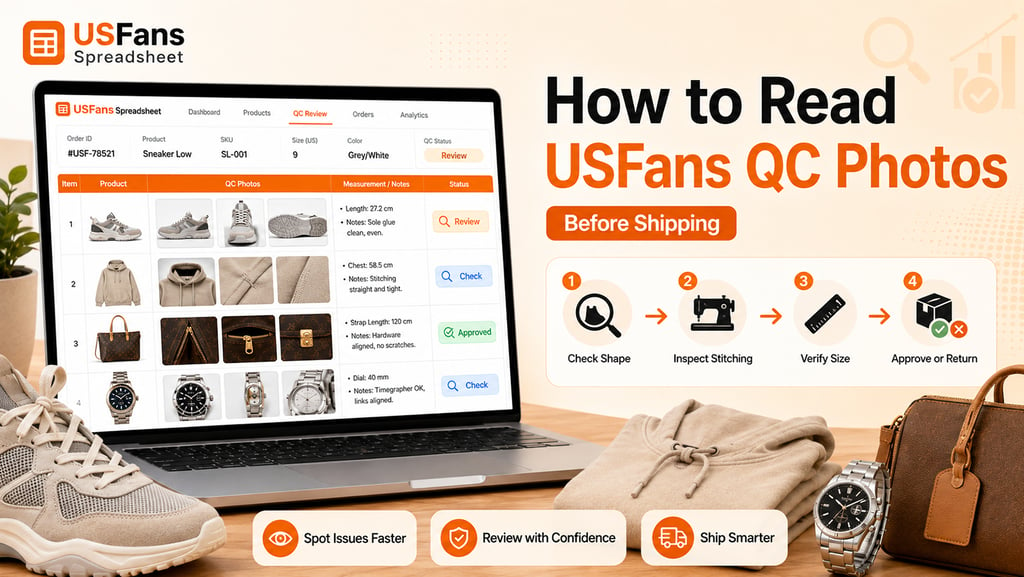

QC photos are one of the most important parts of the shopping-agent process.
After a product reaches the warehouse, the agent usually takes inspection photos showing the actual item received from the seller. These images give buyers a final opportunity to check visible details before the product is packed and shipped internationally.
However, QC photos are only useful when they are reviewed carefully.
A quick glance may reveal obvious damage, but it can easily miss incorrect sizing, poor construction, color differences, missing accessories or details that do not match the original listing.
This guide explains how to read USFans QC photos, what to inspect in each image and how to decide whether an item should be accepted, returned or exchanged.
What Are USFans QC Photos?
QC stands for quality control.
USFans QC photos are warehouse inspection images taken after a purchased product arrives from the marketplace seller.
They usually show the actual item rather than the promotional photos used in the original Taobao, Weidian or 1688 listing.
Depending on the product and warehouse service, the standard photo set may include:
Front view
Back view
Side view
Top or bottom view
Labels and tags
Packaging
Size information
Visible accessories
Product weight or measurements
The purpose of these photos is not to provide a complete professional inspection.
They are designed to help buyers identify obvious issues before international shipping.
Why QC Photos Matter
Once a parcel has been shipped internationally, correcting a product problem becomes much more difficult.
Returns may no longer be practical, international postage may cost more than the product itself and the marketplace seller may not accept claims after a long delay.
QC photos create a review stage before that happens.
They can help reveal:
Wrong product
Wrong color
Wrong size
Missing item
Visible damage
Major shape problems
Incorrect product version
Missing packaging or accessories
Obvious construction defects
This does not mean that every issue can be detected from photos.
Material quality, durability, comfort and hidden construction cannot always be judged accurately from standard warehouse images.
QC photos reduce uncertainty, but they do not eliminate it.
Begin with the Original Order Details
Before inspecting the photos, return to the order information and confirm what was actually purchased.
Check:
Product link
Selected color
Selected size
Selected version
Quantity
Seller listing images
Order notes
Expected accessories
This gives you a clear reference point.
Without comparing the photos with the original order, it is easy to overlook a wrong option or mistakenly treat a normal product detail as a defect.
For example, a warehouse photo may show the correct product but in a slightly different shade because of lighting. On the other hand, it may show a completely different material or version.
The order details help separate real problems from photographic differences.
Check That the Correct Product Arrived
The first question is simple:
Did the warehouse receive the product you ordered?
Confirm:
Product type
Model or style
Color
Size
Quantity
Main design details
Included accessories
This is more important than examining small construction details first.
A product may look good but still be the wrong version.
Pay particular attention when one marketplace listing contains several similar options. Sellers sometimes use the same main image for multiple colors, qualities or versions.
If the item does not match the selected option, contact the shopping service before approving it.
Inspect the Overall Shape
After confirming the product identity, examine its overall shape and proportions.
For clothing, look at:
Body width
Sleeve length
Shoulder shape
Collar shape
Hem alignment
Symmetry
For shoes, examine:
Toe box shape
Heel shape
Sole profile
Left and right shoe symmetry
Overall proportions
For bags, inspect:
Structure
Handle placement
Panel alignment
Base shape
Symmetry
For accessories, check whether the item appears straight, balanced and correctly assembled.
A product can have acceptable small details but still look wrong because its overall shape is distorted.
Shape is usually easier to judge from a full front, back or side photo than from close-up images.
Compare the Left and Right Sides
Many visible defects appear through asymmetry.
Compare both sides of the product carefully.
Look for:
Uneven stitching
Different panel sizes
Misaligned pockets
Uneven shoe shapes
Crooked labels
Handles positioned at different heights
Uneven sleeve or leg length
Hardware placed incorrectly
Some products are naturally asymmetrical by design, so compare the item with the original listing before deciding that something is wrong.
Small differences may also result from the way the item was placed during photography.
Focus on differences that are clearly structural rather than caused by folding or camera angle.
Examine Materials and Surface Texture
QC photos can provide clues about materials, but they should be interpreted carefully.
Look for:
Surface texture
Fabric thickness
Shine or reflectivity
Grain pattern
Creasing
Visible plastic appearance
Uneven surfaces
Color consistency
For clothing, check whether the fabric appears too thin, stiff or uneven.
For footwear, examine leather, suede, mesh, rubber and sole texture.
For bags, inspect surface grain, edge finishing and hardware appearance.
Remember that warehouse lighting can make materials look brighter, flatter or more reflective than they appear in person.
Use several photos rather than judging material quality from one angle.
Check Stitching and Construction
Stitching is one of the most useful visible indicators of construction quality.
Inspect:
Stitch spacing
Straightness
Loose threads
Double stitching
Missing stitches
Uneven seams
Misaligned panels
Fraying
A few loose threads may be minor and removable.
However, broken seams, major misalignment or inconsistent stitching around important structural areas can indicate a larger construction issue.
Pay particular attention to:
Bag handles
Shoe panels
Jacket zippers
Pocket edges
Waistbands
High-stress seams
Not every stitch will be perfectly visible in standard photos. If a critical area is unclear, requesting a close-up image may be worthwhile.
Inspect Printed and Embroidered Details
Printed, embroidered or applied details can show obvious quality differences.
Check:
Alignment
Position
Letter spacing
Edge sharpness
Thread density
Color consistency
Cracking
Peeling
Missing sections
For embroidered designs, look for loose threads and uneven fill.
For printed designs, inspect whether the image is centered and whether edges look clean.
For labels or patches, compare their position with the original product photos.
Minor differences may be acceptable depending on the product and price, but large placement errors or damaged printing should be reviewed before approval.
Review Labels and Size Tags
Labels are important because they help confirm that the correct size and version were received.
Check:
Size tag
Care label
Product label
Model information
Color code
Packaging label
A correct external appearance does not guarantee that the correct size was sent.
Make sure the tag matches the size selected in the order.
For shoes, check the size label on the box and inside the product where visible.
For clothing, compare the size tag with the listing and size chart.
If the size label is correct but you still have concerns about fit, measurements are more reliable than the tag alone.
Use Measurements Whenever Possible
Measurements are especially important for clothing, shoes and bags.
Useful measurements may include:
Chest width
Shoulder width
Garment length
Sleeve length
Waist width
Inseam
Shoe insole length
Bag width and height
Compare warehouse measurements with:
Seller size chart
Your body measurements
An item you already own
Expected product dimensions
Do not assume that a size label guarantees fit.
A product marked as large may still measure smaller than expected.
If measurements are missing and fit is important, consider requesting an additional measurement photo before approval.
Check for Visible Damage
Look for visible defects that may have occurred during production, seller handling or domestic shipping.
Possible issues include:
Scratches
Stains
Tears
Dents
Cracks
Broken hardware
Damaged soles
Missing buttons
Bent parts
Water marks
Packaging damage
Determine whether the issue affects only packaging or the product itself.
A damaged box may not matter if you do not need the original packaging. However, damage to the product should be reviewed carefully.
Zoom in on suspicious areas where possible.
A shadow, reflection or folded fabric can sometimes look like damage, so compare multiple images before making a decision.
Confirm That Accessories Are Included
Some products should include additional items.
Examples may include:
Laces
Straps
Dust bags
Boxes
Tags
Replacement parts
Belts
Small accessories
Compare the warehouse photos with the marketplace listing and order description.
If an accessory was clearly included in the listing but is missing from the QC photos, ask the warehouse to confirm whether it arrived.
Do not assume that every accessory shown in promotional images is automatically included. Some listings use display items only.
The written description and selected product option are more reliable than decorative photos.
Understand Warehouse Lighting
Warehouse lighting can affect how a product appears.
Common differences include:
Colors appearing warmer or cooler
Black looking gray
White looking yellow
Glossy surfaces appearing brighter
Texture looking flatter
Shadows changing product shape
Before rejecting an item because of color, compare all available photos.
Also compare the warehouse images with customer or historical QC photos if available.
A consistent color difference across several warehouse items may indicate lighting rather than a product issue.
Color concerns are more serious when the item is clearly a different shade or when only one panel looks inconsistent.
Consider Camera Angle and Distance
Camera angle can distort proportions.
A photo taken too close may make one part of the product look larger. A wide-angle lens can change the apparent shape of shoes, bags or clothing.
When reviewing proportions:
Use full-product photos
Compare front and side views
Avoid judging shape from one close-up
Look for consistent issues across several images
If only one photo makes the item look distorted but the others appear normal, the difference may come from the camera angle.
Real shape problems usually remain visible from more than one view.
Know the Limits of Standard QC Photos
Standard warehouse photos usually focus on visible condition and basic product confirmation.
They may not reveal:
Internal construction
Material durability
Comfort
Long-term performance
Exact smell
Hidden stitching
Electronic functionality
Small defects not visible at normal distance
This is why QC photos should not be treated as a complete guarantee.
They are most useful for confirming:
Correct item
Correct option
Visible condition
Basic shape
Obvious construction
Measurements
Buyers should maintain realistic expectations about what can be assessed from images.
When to Request Additional Photos
Additional photos may be useful when a standard image does not show an important detail.
Consider requesting more photos when:
A suspected defect is unclear
A logo or label is hidden
Measurements are missing
The product color is uncertain
Important accessories are not shown
A shoe size label is not visible
A bag interior is not photographed
A specific construction detail matters
Request focused photos rather than asking for general extra images.
For example:
close-up of the left sleeve seam
measurement of garment length
photo of the shoe size label
image of the bag interior
close-up of a scratched area
Specific requests are easier for warehouse staff to complete and more useful for decision-making.
Distinguish Minor Issues from Major Defects
Not every visible imperfection requires a return.
Minor issues may include:
Small loose thread
Slight packaging damage
Minor crease from storage
Small color variation caused by lighting
Removable dust
Slightly uneven folding
More serious issues may include:
Wrong size or color
Major damage
Broken hardware
Incorrect product version
Large stains
Severe asymmetry
Missing key accessories
Significant measurement difference
Major construction failure
The decision should consider:
Product price
Intended use
Return cost
Seller return policy
Severity of the issue
Whether the issue can be fixed easily
A small imperfection on a low-cost item may be acceptable, while the same issue on a higher-priced product may justify an exchange.
When to Accept the Item
The item may be reasonable to approve when:
It matches the ordered product
The size or measurements are acceptable
No major damage is visible
Construction appears suitable
All important parts are included
Any minor issues are acceptable to you
The product matches your expectations for the price
Approval should be based on your own priorities rather than the idea that every item must be perfect.
The purpose of QC review is to identify unacceptable problems, not to search endlessly for tiny variations.
When to Return or Exchange the Item
A return or exchange may be appropriate when:
The wrong product arrived
The wrong size was sent
The wrong color or version was received
The item is visibly damaged
Important accessories are missing
Measurements differ significantly
Construction problems affect usability
The item does not match the seller listing in a meaningful way
Act quickly.
Return windows are often limited, and seller approval may be required.
Before requesting a return, review:
Seller policy
Domestic return shipping cost
Return deadline
Product condition requirements
Whether an exchange is possible
A clear explanation supported by the QC photos can make the request easier to process.
A Practical QC Review Order
To avoid missing important details, review the photos in a consistent order:
Confirm the correct product
Check size, color and quantity
Inspect overall shape
Compare both sides
Review materials and texture
Check stitching and construction
Inspect labels and printed details
Review measurements
Look for damage
Confirm accessories
Compare with the original listing
Decide whether more photos are needed
This process is more reliable than zooming in randomly on small details.
Complete USFans QC Photo Checklist
Before approving the item, confirm:
Correct product received
Correct color
Correct size
Correct quantity
Overall shape looks acceptable
Left and right sides are consistent
Materials match expectations
Stitching is acceptable
Labels and tags are correct
Printed details are aligned
Measurements are suitable
No major stains or damage are visible
Accessories are included
Packaging condition is acceptable
No important area is missing from the photos
If one of these points cannot be confirmed, request clarification before shipping.
Final Thoughts
USFans QC photos are most valuable when they are reviewed systematically.
Do not focus only on small visual details. Begin with the most important questions:
Is it the correct product?
Is the size correct?
Is the item visibly damaged?
Does the shape look acceptable?
Are important accessories included?
Do the measurements work for you?
After these basic checks, inspect materials, stitching, labels and smaller details.
QC photos cannot guarantee perfect quality, but they can help buyers identify visible problems while returns or exchanges may still be possible.
A careful warehouse review is usually much easier and less expensive than discovering a problem after international delivery.
Frequently Asked Questions
What does QC mean in USFans?
QC means quality control. It refers to the warehouse inspection stage and the photos taken after a product arrives from the marketplace seller.
Are USFans QC photos taken by the seller?
No. Warehouse QC photos are generally taken after the product reaches the shopping-agent warehouse.
Can QC photos confirm product quality completely?
No. They can show visible condition, shape, sizing details and defects, but they cannot fully confirm durability, comfort or hidden construction.
What should I check first in QC photos?
First confirm that the correct product, color, size and quantity arrived. Then review shape, measurements, construction and visible damage.
Can warehouse lighting change product color?
Yes. Lighting and camera settings can make colors appear warmer, cooler, brighter or darker than they look in person.
Should I request extra photos for every item?
No. Additional photos are most useful when an important detail, measurement or suspected defect is not visible in the standard images.
Can I return an item after reviewing QC photos?
Returns or exchanges may be possible before international shipping, depending on the seller’s policy, return deadline and shopping-service rules.
What happens if I approve a product with a visible problem?
Once the item is shipped internationally, returning it may become difficult or uneconomical. Review visible concerns before parcel submission.
Recommended Links
→ Browse the USFans Spreadsheet
→ Explore USFans Spreadsheet Guides
→ How to Research Products and Sellers on the USFans Spreadsheet