How to Compare Product Batches on the USFans Spreadsheet
Learn how to compare product batches on the USFans Spreadsheet using recent QC photos, measurements, materials, construction, consistency and price differences before ordering.
GoGo Finder
7/13/20269 min read
Different listings can appear to offer the same product while delivering noticeably different results.
One seller may provide a lower-priced version, another may offer a different production run, and a third may use the same promotional photos while shipping an item with different materials or measurements.
This is why buyers often compare product batches before ordering.
A batch usually refers to a particular production version, manufacturing source or release of a product. Batch labels can help organize comparisons, but they should never be treated as a guarantee by themselves.
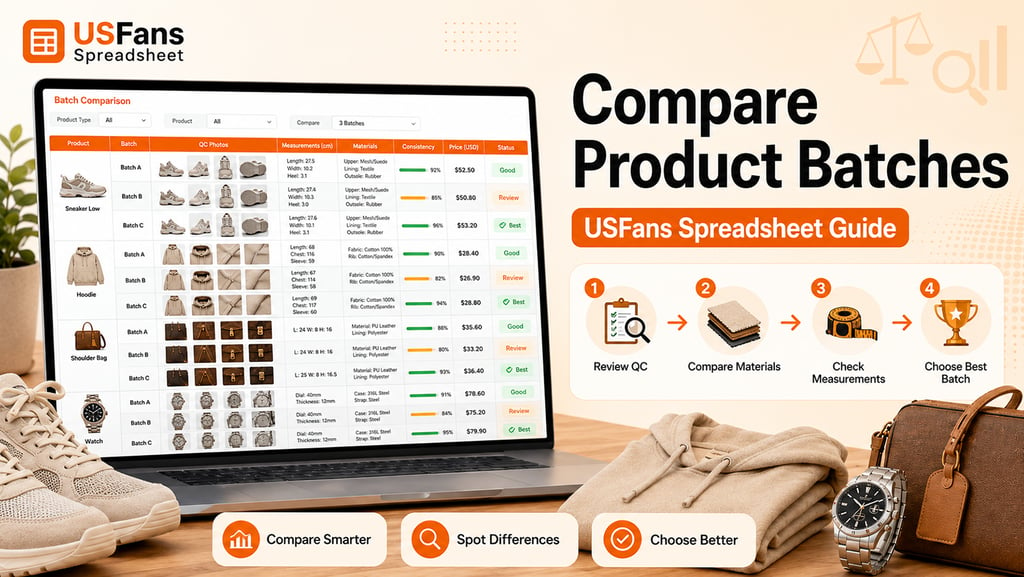
The most reliable way to compare batches is to examine recent QC photos, measurements, construction details, materials and consistency across several orders.
This guide explains how to compare product batches on the USFans Spreadsheet without relying only on seller claims, price or popularity.
What Does “Batch” Mean?
In this shopping context, a batch generally refers to a specific version or production source of a product.
Two listings may show a similar design but come from different:
Factories
Production runs
Material suppliers
Quality levels
Seller sources
Price tiers
Manufacturing dates
A batch name may be used to distinguish one version from another, but batch naming is not always standardized.
The same label may be used differently by separate sellers, and a seller may continue using an established batch name even after the actual production details change.
For this reason, the batch label should be treated as a starting point for research rather than final proof of quality.
Batch and Seller Are Not the Same Thing
A seller and a batch describe different parts of the purchase.
The seller is the marketplace store or person offering the product.
The batch refers to the product version or production source.
One seller may offer several batches. Several sellers may also offer the same batch.
This distinction matters because choosing a trusted seller does not automatically confirm which product version will be shipped.
Similarly, finding a well-known batch name does not confirm that every seller using that name provides the same item.
Before ordering, verify:
Which batch or version is selected
Whether the listing clearly identifies the version
Whether the seller has recent QC evidence
Whether the product options match the advertised batch
Whether the price reflects the intended version
Why Products from Different Batches Can Vary
Products that share the same general appearance can differ in several important ways.
Common differences include:
Shape and proportions
Material texture
Fabric weight
Stitching quality
Hardware
Labels
Colors
Measurements
Packaging
Overall consistency
These differences may result from factory equipment, material availability, production methods or quality-control standards.
Even products from the same batch can vary slightly between units.
The goal of batch comparison is therefore not to find a version where every item is identical. It is to identify which version most consistently meets your priorities.
Define What Matters Before Comparing
A batch cannot be described as “best” without considering what the buyer values.
One person may prioritize:
Lower price
Better shape
More accurate measurements
Stronger materials
Cleaner stitching
Better availability
Easier returns
Another buyer may accept small visual differences in exchange for a lower total cost.
Before comparing batches, decide what matters most.
A useful priority list might include:
Correct sizing
Consistent construction
Acceptable materials
Recent QC evidence
Reasonable price
Reliable availability
Without clear priorities, it is easy to overfocus on small details that do not affect the actual buying decision.
Use Recent QC Photos First
Recent QC photos are usually the most useful source for batch comparison.
Older images can still provide context, but they may not represent current production.
A factory may change:
Materials
Stitching methods
Hardware
Labels
Packaging
Sizing
Color tones
When reviewing QC photos, check the upload or order timing where possible.
Give more weight to:
Recent warehouse photos
Several different orders
Multiple sizes
Multiple angles
Repeated examples from the same version
A single excellent QC set does not prove that an entire batch is consistently strong.
Several recent examples provide a more reliable picture.
Compare Overall Shape and Proportions
Shape is often one of the most visible batch differences.
For shoes, compare:
Toe box profile
Heel height
Sole shape
Panel proportions
Left and right symmetry
For clothing, compare:
Body width
Sleeve length
Shoulder structure
Hood shape
Garment length
Overall fit
For bags, compare:
Panel dimensions
Handle placement
Structure
Base shape
Opening width
Use full-product images rather than relying only on close-ups.
A version may have clean stitching but still look incorrect because the overall proportions are different.
Compare Measurements, Not Size Labels
Size labels do not always translate into identical dimensions.
Two batches marked as the same size may differ in:
Garment width
Length
Sleeve measurement
Waist
Inseam
Shoe insole length
Bag dimensions
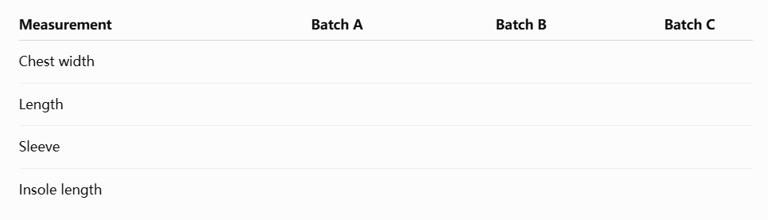
Measurements are especially useful when comparing versions because they provide objective data.
Create a simple table:
Compare the figures with the seller’s size chart and your own requirements.
A batch with better visual details is not necessarily the best choice if its measurements are unsuitable.
Compare Materials and Surface Appearance
Material differences can affect appearance, comfort and durability.
When comparing QC photos, look at:
Surface grain
Fabric thickness
Reflectivity
Texture
Color consistency
Creasing
Edge finishing
Lining
Do not make a decision from one image.
Lighting can make the same material appear different across warehouses or photo sets.
Look for patterns across several QC examples.
If one batch repeatedly appears thinner, shinier or stiffer than another under different conditions, the difference may be meaningful.
Product descriptions can support the comparison, but visible evidence should carry more weight than vague claims such as “premium material.”
Compare Stitching and Assembly
Construction quality is often more important than tiny decorative differences.
Review:
Stitch spacing
Seam alignment
Loose threads
Panel placement
Edge finishing
Reinforcement
Hardware attachment
Zipper alignment
Compare the same areas across batches.
For example, if comparing hoodies, review the hood seam, pocket alignment and cuff construction for each version.
For bags, compare handle stitching, zipper installation and corner finishing.
A few isolated loose threads may not indicate a weak batch. Repeated construction problems across several QC sets are more significant.
Review Details in Context
Small details can help distinguish batches, but they should be evaluated according to their importance.
Possible differences include:
Label placement
Printed text
Embroidery
Hardware shape
Logo position
Color tone
Packaging
Do not allow one minor detail to dominate the decision unless that detail is personally important.
A batch with a slightly different label position may still provide better materials, sizing and construction.
Focus first on:
Usability
Fit
Visible condition
Structure
Consistency
Then consider smaller visual details.
Check Consistency Across Multiple Orders
Consistency is one of the strongest signs of a dependable batch.
A batch may produce one excellent item and several weaker ones.
Review multiple QC examples and ask:
Does the shape remain similar?
Are measurements reasonably consistent?
Are the same defects repeated?
Does stitching quality vary greatly?
Are colors stable?
Are accessories included consistently?
A slightly less impressive batch with stable results may be a better choice than one that occasionally looks excellent but varies widely.
Consistency matters because you are ordering one future unit, not selecting the best image from previous orders.
Look for Repeated Defects
Repeated defects can reveal a batch-level issue.
Examples include:
The same crooked seam
Repeated incorrect measurements
Uneven heel shape
Misaligned pockets
Weak hardware
Consistent color mismatch
Poor edge finishing
One unusual item may be an isolated defect.
The same issue appearing across several recent QC sets is more likely to reflect production consistency.
Record repeated problems during comparison instead of judging each photo set separately.
Compare the Same Size and Version
Batch comparisons are only useful when the products are reasonably comparable.
Avoid comparing:
Different sizes without considering proportion changes
Different colors with different materials
Budget and premium options under one listing
Older and current production without noting timing
Different product models that only look similar
Whenever possible, compare:
The same product style
The same size
The same color
A similar production period
The same selected version
This creates a fairer comparison and reduces misleading conclusions.
Understand Price Differences
Price can indicate a different version, but it does not prove higher quality.
A higher price may reflect:
Better materials
Different production source
Higher seller margin
Better packaging
Limited availability
Stronger return support
Market popularity
A lower price may reflect:
Simpler materials
Older stock
Fewer accessories
Lower seller margin
A budget-oriented version
Compare the visible and practical differences before deciding whether the price gap is justified.
Ask:
Is the shape noticeably better?
Are measurements more suitable?
Is construction more consistent?
Are materials visibly improved?
Are return conditions better?
If the differences are small, a cheaper batch may provide better value.
When a Budget Batch May Be Enough
A lower-priced version can be a sensible choice when:
The product is simple
Fit and measurements are suitable
Recent QC results are stable
Construction is acceptable
Minor visual differences do not matter
The buyer has a limited budget
The best batch is not always the most expensive one.
For everyday use, a stable budget batch may offer better value than a premium version with improvements that are difficult to notice.
The decision should reflect your needs rather than community popularity.
When a Higher-Priced Batch May Be Worth It
A more expensive batch may be justified when it offers clear advantages.
Examples include:
More accurate proportions
Better material texture
Stronger construction
More consistent measurements
Fewer repeated defects
Better hardware
Stronger recent QC results
The improvement should be visible or measurable.
Do not pay more simply because a batch has a recognizable name.
A batch reputation can become outdated when production changes.
Use current evidence.
Do Not Rely Only on Community Rankings
Online discussions can help identify versions worth researching, but rankings are subjective.
Different users may value:
Visual accuracy
Comfort
Materials
Price
Durability
Availability
A batch described as “best” in one discussion may not be suitable for your size, budget or intended use.
Community opinions are most useful when they point you toward specific factors to check.
They should not replace recent QC photos and direct comparison.
Build a Batch Comparison Table
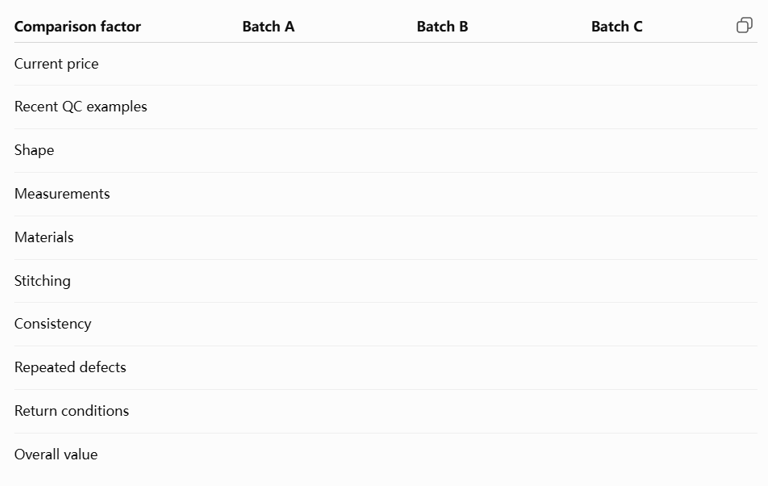
A comparison table keeps the decision objective.
Use categories such as:
Use short notes rather than vague scores.
For example:
stable shape across five recent orders
slightly short garment length
better material but inconsistent stitching
lower price with acceptable construction
Specific notes are more useful than simply writing “good” or “bad.”
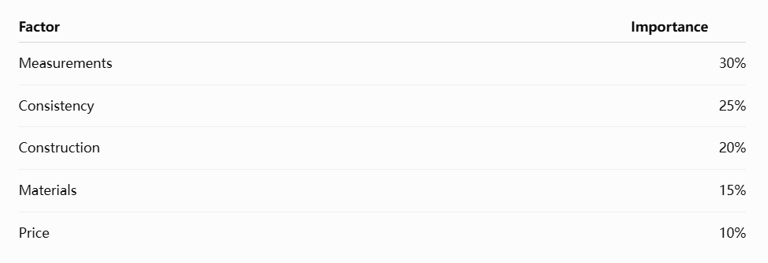
Use a Weighted Decision Method
When several batches appear similar, assign greater importance to the factors that matter most.
Example:
This prevents a small price difference from outweighing an important sizing or consistency issue.
The percentages do not need to be mathematically perfect. Their purpose is to clarify your priorities.
Confirm the Exact Batch Before Ordering
After choosing a version, make sure the order reflects that decision.
Check:
Selected listing
Product option
Batch name
Size
Color
Price
Order note
If the listing contains several versions, specify the intended one clearly.
Do not assume that the seller will automatically send the version shown in the main image.
If the batch information is unclear, request confirmation before purchase.
Recheck the Batch at Warehouse Arrival
The comparison process does not end when the order is placed.
When the item reaches the warehouse:
Confirm that the expected version arrived
Review the new QC photos
Compare them with the batch examples used during research
Check measurements
Look for known repeated defects
A batch comparison helps set expectations, but the final decision must be based on the actual item received.
If the warehouse item differs significantly from the researched examples, request clarification, return or exchange where appropriate.
Common Batch Comparison Mistakes
Avoid these mistakes:
Assuming a batch name guarantees quality
Comparing only one QC example
Using old QC photos as current evidence
Ignoring measurements
Comparing different sizes as if they were identical
Choosing only by price
Focusing on tiny details before overall shape
Treating community rankings as permanent
Ignoring repeated defects
Failing to confirm the selected version
A strong comparison uses current, repeated and relevant evidence.
Practical Batch Comparison Checklist
Before ordering, confirm:
The batch or version is clearly identified
Several recent QC examples are available
The same product and size are being compared
Overall shape is acceptable
Measurements fit your needs
Materials appear consistent
Construction is stable
Repeated defects have been identified
The price difference is justified
The seller can provide the selected version
Return conditions are understood
If the version cannot be confirmed clearly, choose a better-documented listing.
Final Thoughts
Comparing product batches on the USFans Spreadsheet is not about finding a universally perfect version.
It is about finding the version that best matches your priorities.
A reliable comparison should consider:
Recent QC evidence
Overall shape
Measurements
Materials
Construction
Consistency
Repeated defects
Price
Batch names, seller claims and online rankings can help direct your research, but they should not determine the decision alone.
The strongest choice is usually the batch with clear current evidence, suitable measurements, acceptable construction and a price that reflects real advantages.
After ordering, review the actual warehouse item carefully before international shipping.
Frequently Asked Questions
What is a product batch?
A product batch is a particular production version, source or manufacturing run. Different batches of a similar product may vary in materials, shape, measurements and construction.
Is the most expensive batch always the best?
No. A higher price may reflect better materials or consistency, but it may also reflect seller margin, popularity or limited availability.
Can different sellers offer the same batch?
Yes. Several sellers may offer the same batch, and one seller may offer several different versions.
Are batch names reliable?
Batch names can help organize research, but they are not always standardized. Confirm the actual product using recent QC photos and listing details.
How many QC examples should I compare?
There is no fixed number, but several recent examples are more useful than one isolated photo set. Look for consistent patterns across different orders.
Should I compare measurements between batches?
Yes. Two batches with the same size label can have different actual dimensions.
Can a batch change over time?
Yes. Materials, factories, production methods and quality consistency can change even when the batch name remains the same.
What matters more: batch or seller?
Both matter. The batch affects the product version, while the seller affects availability, order handling and whether the requested version is actually supplied.
Recommended Links
→ Browse the USFans Spreadsheet
→ Explore USFans Spreadsheet Guides
→ How to Research Products and Sellers on the USFans Spreadsheet